Built Around The Way Growing Businesses Run
Most medical practices across Dallas-Fort Worth cannot justify a full IT department, so the office manager, a clinical lead, or a single in-house tech ends up absorbing the work on top of patient care and a HIPAA responsibility they did not sign up to carry alone.
We bring enterprise-grade tooling, documented processes, a signed BAA, and a local team that knows your setup, sized to a monthly number you can actually budget. Your clinical and front-office staff stop firefighting the EHR, and you stop losing hours to problems nobody signed up to solve.
What We Deliver For Your Practice
Keep the EHR, the schedule, and the lab interfaces running every clinic hour.
Get a Fort Worth technician on the line within sixty seconds, not a call center.
Map the technical safeguards to the HIPAA Security Rule, not to a checkbox list.
Encrypt laptops, tablets, and phones so a lost device is not a reportable breach.
Block the ransomware crews that now open the morning by freezing the schedule.
Align controls with HIPAA, HITECH, and NIST 800-66 for audit and insurer review.
Replace a patchwork of one-off vendors with one accountable partner.

“Corptek has taken care of our IT needs for many years. They are knowledgeable, professional and courteous. The techs are always patient with our level of or lack of techie knowledge and have solved many computer issues from the very simple to the most complicated. We have never been disappointed.”

MONICA CAPUANO
Texas
“Corptek has taken care of our IT needs for over 12yrs. They are always easy to work with and professional. They have solved many computer issues from the very simple to the most complicated. We have never been disappointed.”

Patty Reid
Texas
“Jason and his team have been great to work with! We utilized their services for an email migration from one platform/account to a new one, and it could not have gone smoother. Jason was always available and accessible to answer all questions throughout the process. I still reach out to him from time to time for ongoing support, and he continues to be a huge help. 5/5 stars for sure!”

Patrick Beachner
Texas
How We Support Healthcare Practices
Medical practices need IT that respects the realities of clinical work, the weight of a HIPAA incident, and the difference between a front-office workstation and a PACS server. Our approach holds four lines: systems that stay up through the clinic day, a real person who answers when the schedule stops loading, technical safeguards mapped to the HIPAA Security Rule, and workflows that match how physicians, nurses, and front-office staff actually run a day.
HIPAA Held By Default
A medical network is not a coffee-shop Wi-Fi. Every layer, firewalls, access controls, endpoint encryption, backups, audit logs, ships mapped to the HIPAA Security Rule by default, so a lost laptop, a phishing click at the front desk, or a curious employee never turns into a breach letter and an OCR response.
Shaped By How You Operate
Our configurations match how clinics, specialty practices, and multi-site medical groups actually run, not how generic templates assume. Morning rooming, lab result routing, e-prescribing, telehealth sessions, and end-of-day reconciliation all align with the rhythm of a real clinical team.
Clinic-Hour Response
A Fort Worth technician picks up inside sixty seconds when rooming stops, lab results stall, or the schedule will not load, not a ticket queue, a call center, or an automated menu that burns a half day while the waiting room fills.
Eyes On The Clinic Network
Servers, endpoints, firewalls, EHR connections, and backup jobs sit under continuous watch, so a failing drive, a misbehaving patch, or a weekend ransomware attempt is caught and contained long before Monday morning rooming starts.





Healthcare IT Is Complex
We meet the practice where it actually is today, a lean clinic running six exam rooms with two office staff or a multi-location group stretched across five offices, and shape the service to how your front office, clinical team, and billing office really talk to each other. Your practice gets the HIPAA discipline of a larger shop, the response time of a local partner, and the invoice of a Fort Worth.
We step into that gap with a team, a toolset, and accountability, so the practice stops hoping the EHR stays up and the records are safe and starts knowing.
Let Us Take Care Of It For You, Day In and Day Out
Practices change the fastest of any business we work with: a new provider joins, a second location opens, a lab interface is added, a new modality lands in exam two. No re-contract, no rip-and-replace, and no pretending the new endpoint count is a whole new engagement.
That same flex works in the other direction too, because the service is sized to what the practice actually runs, not a best-case scenario in a sales deck. When the practice closes an office, drops a legacy product, or consolidates vendors, the monthly figure moves with it.

Cybersecurity Services
HIPAA-Aware Protection For Every Workstation, EHR, And Mobile Device
Healthcare practices sit at the top of every threat-actor target list, from commodity ransomware crews to organized groups that know a medical group will pay to reopen the schedule. A successful intrusion does not just cost data, it can halt the clinic, trigger a HIPAA breach notification, land the practice on the HHS public breach portal, and put an OCR investigation in front of the physician owner. Our cybersecurity service stacks email authentication, advanced phishing defense, endpoint detection and response, multi-factor everywhere, vendor-access governance, and encryption at rest and in transit, all mapped to the HIPAA Security Rule and NIST 800-66.
Endpoint detection and response on every workstation, laptop, tablet, and server.
Quarterly phishing simulations and staff training tuned to healthcare lures.
Encryption, MFA, and audit logging that satisfy a HIPAA risk analysis.
Managed IT Services
A Predictable Monthly Line Across Every Clinic And Back Office
Practice managers and physician owners need an IT line they can forecast, not a year of surprise invoices. Our managed service covers the front office, the clinical network, the billing team, and every endpoint for a simple per-user monthly figure, with after-hours call-outs, emergency replacements, and new-provider onboarding staying inside the same number. When a second location opens, when a new provider starts, or when the scanner in exam two dies at 8:03 on a Monday, the operating expense line and the response time stay steady.
Flat per-user pricing that stays steady as providers, locations, and systems grow.
One accountable team covering tickets, patches, backups, and new-provider onboarding.
Proactive maintenance so the morning clinic and the month-end close are not the first test.
Incident Response Planning
A Written Plan For Ransomware, EHR Outage, And OCR Scrutiny
When the EHR goes dark, a workstation alarms on an unknown host, or a ransomware note lands on the office file server, the first hour decides whether the practice contains the event or explains it to a regulator and an insurer. We build a healthcare-specific incident response plan covering ransomware, EHR outages, fraudulent vendor wire attempts, lost mobile devices, and vendor-side breaches, then tabletop-test it with the office manager, the clinical lead, and the compliance officer. When the OCR, a cyber insurer, or a payer asks how the practice would respond, the playbook, the contacts, and the decision rights are already locked in.
Playbooks covering ransomware, EHR outages, lost devices, and vendor breaches.
Tabletop exercises with the compliance officer, office manager, and clinical lead.
Encrypted off-site backups tested monthly so recovery is not a first attempt.
Why Healthcare Practices Stay With Us
Dallas-Fort Worth has no shortage of IT companies chasing healthcare logos. We have been at this for two decades because we quietly deliver the work that matters when the EHR locks up at the start of morning clinic, a laptop goes missing from a provider's car, or a phishing email hits the billing inbox ten minutes before payroll.
Fluent In Clinical And Back-Office Tech
Our team of expert technicians know their way around the systems medical practices actually run on, EHRs, practice management, lab interfaces, PACS and imaging, e-prescribing, patient portals, and the endpoint fleet that ties them together. No one learns your clinic on the clock during a HIPAA incident.
Practice-Level Response
When an office manager calls us because the staff schedule will not load and the waiting room is filling up quickly, our response is not to log a ticket number. A real technician picks up, owns the problem, and stays with it until the EHR is back, the lab results are flowing, and the physician can walk away from the phone.
HIPAA Safeguards By Default
Encryption, multi-factor, audit logging, least-privilege access, and signed Business Associate Agreements come standard as apart of our support, not as extras added after a risk analysis. The controls that stop a front-desk click from becoming a breach letter are running by default instead of waiting on someone to turn them on.
Transparent Practice-Wide Pricing
Your IT expenses stay the same month in and month out, with any changes given proper notice. We follow a simple per-user, per-location rate, and the typical surprises (after-hours call-outs, emergency replacements, new-office build weekends) stay inside the same monthly number, so you always have a good idea of what you're paying for IT.
FAQs About Our IT Support For Healthcare Practices
How do you keep a HIPAA breach from becoming an OCR investigation?
The controls are engineered in, not hoped for. We combine endpoint encryption, multi-factor authentication, access controls, and continuous monitoring with a documented HIPAA risk analysis and a signed BAA for every vendor that touches PHI. When a laptop is lost or a phishing click lands, encryption makes the device a non-event and detection makes the intruder a short stay. The practice meets the breach threshold far less often, and when notification does apply, the documentation, the timeline, and the reportable-harm analysis are already in hand instead of assembled in a panic.
What happens if ransomware hits our clinic during the morning schedule?
Encrypted off-site backups refresh continuously and are tested monthly, so the practice can restore the EHR, scheduling, and critical shares without paying a ransom. Because endpoints, servers, and backups are segmented, a hit on a workstation does not take the whole clinic down. The written incident response plan moves the office through notification, forensics, and return-to-service while keeping the OCR, patients, and the cyber insurer informed on the right timeline, and the clinical team has a printed downtime workflow so rooming and charting can continue on paper until systems are back.
Can you align our controls with HIPAA, hitech, and NIST 800-66?
Yes. The service is built around the HIPAA Security Rule, HITECH breach-notification requirements, and NIST 800-66 technical and administrative safeguards, not bolted onto a generic SMB template. We document administrative, technical, and physical safeguards, maintain an asset and vendor inventory with signed BAAs, and hand the practice an exam-ready binder when an OCR letter, a payer audit, or a cyber insurer asks. Your office manager and compliance officer stop assembling evidence from scratch every review.
How do you keep the ehr and lab interfaces up across every location?
Reliability is engineered in, not hoped for. We combine redundant internet with cellular failover so a single fiber cut does not close the clinic for the day. Servers and endpoints are hardened for clinic realities, failover is tested on a schedule instead of in the moment, and every location ships with documented network plans, EHR connectivity settings, and out-of-band access so the office manager can reach a system even when the primary link is down. Lab interfaces, e-prescribing, and patient portals are monitored the same way, so a silent outage never surprises the practice at noon.
Headquarters
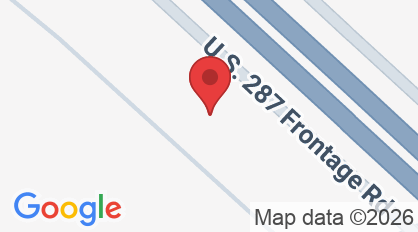
733 U.S. 287 Frontage
Rd Suite 401
Mansfield, TX 76063